When your toilet suddenly stops working, whether due to a water outage, a broken handle, or a tank issue, it can quickly turn into a stressful situation. The good news is, you don’t always need running water or a fully working flush system to use your toilet.
It’s a common situation in many homes, especially during water outages or small toilet issues.
If you’re wondering how to flush a toilet manually, there are a few simple methods that can get things working again safely and effectively. If your toilet isn’t responding at all, you might be dealing with a bigger issue like a toilet that won’t flush. In most cases, the fix is easier than it seems.
When You Might Need to Flush a Toilet Manually
Most people don’t think about manual flushing until they actually need it. It usually comes up in situations like a water supply being turned off, a toilet that isn’t flushing properly, or a broken handle or chain inside the tank. It can also happen during plumbing repairs or unexpected emergencies.
In these moments, knowing what to do can save you from a messy and frustrating problem.
How a Toilet Flush Works (Quick Understanding)
Before jumping into the solution, it helps to understand what’s happening behind the scenes.
A normal toilet flush works by releasing water from the tank into the bowl. This creates pressure that pushes waste through the drain. When the tank can’t release water, either due to a lack of water or a mechanical issue, you simply need to recreate that pressure manually.
How to Flush a Toilet Manually (3 Easy Methods)
There’s more than one way to handle this, and the right method depends on what’s actually causing the issue.
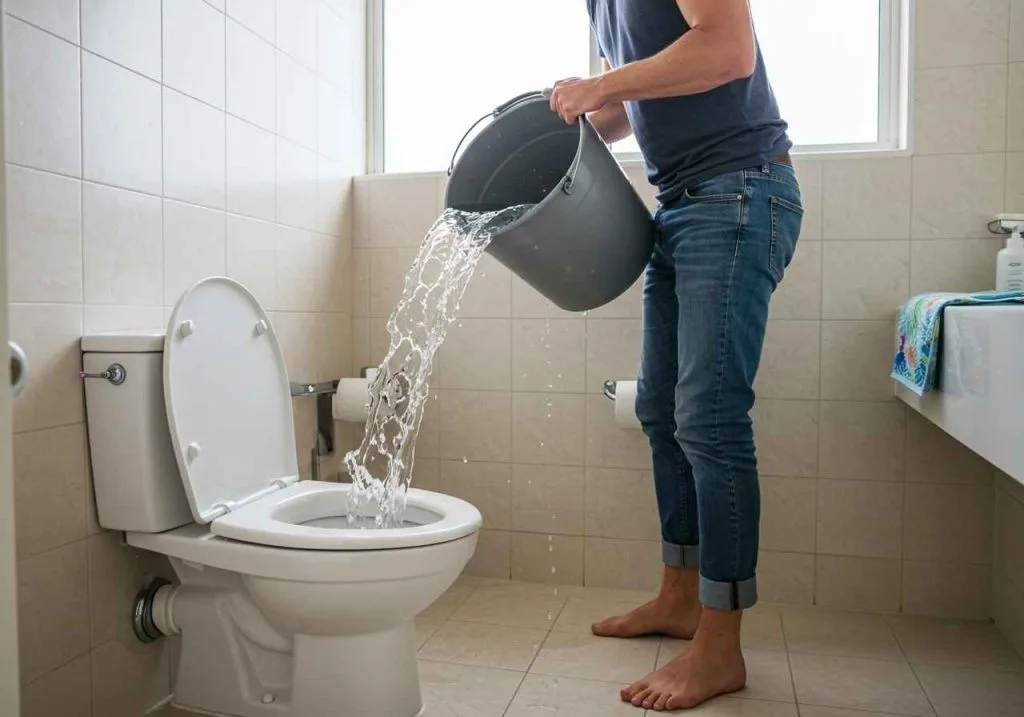
Method 1: Use a Bucket of Water (Most Reliable)
This is the simplest and most effective method in most situations.
Steps:
Fill a bucket with about 1–2 gallons of water
Pour the water quickly into the center of the bowl
Let the force of the water trigger the flush
When done correctly, the toilet should flush almost instantly. This works because the sudden force of water mimics the pressure created by a normal flush.
Method 2: Refill the Tank Manually
If your tank is empty but still functioning, you can restore a normal flush by refilling it yourself.
Steps:
Remove the tank lid carefully
Pour water directly into the tank
Fill it to the usual water line
Use the handle as you normally would
This method essentially brings the toilet back to its standard operation.
Method 3: Lift the Flapper Manually
If the handle or chain is broken, you can still flush the toilet by activating it yourself.
Steps:
Open the tank lid
Locate the flapper at the bottom
Lift it gently to release water into the bowl
This allows the tank to empty and flush just like it normally would.
A Few Simple Tips to Avoid Mistakes
Manual flushing is straightforward, but small mistakes can make it less effective. For example, pouring water too slowly won’t create enough pressure to trigger a flush. On the other hand, adding too much water at once can cause the bowl to overflow.
It’s also a good idea to use clean water when possible and handle tank components gently to avoid damage.
What If Manual Flushing Doesn’t Work?
If you’ve tried these methods and nothing happens, the issue may not be related to the flushing mechanism at all.
In many cases, this points to a clog, a blocked pipe, or a deeper plumbing problem. You may also notice the toilet still drains slowly, which is a common sign of a slow flushing toilet. You might also notice other signs like slow drainage or unusual sounds coming from the toilet.
Related Issues You Might Notice
Sometimes, manual flushing problems don’t come alone. You may also hear unusual sounds, which could point to a gurgling toilet issue.
These signs often indicate that the issue is part of a larger plumbing problem rather than just a temporary inconvenience.
When It’s Time to Call a Professional
Manual flushing is a helpful temporary solution, but it’s not meant to fix every problem.
If the toilet still won’t flush, or if water starts rising instead of draining, it could lead to an overflowing toilet or affect multiple fixtures in your home. It’s usually a sign of something more serious. In these situations, getting professional help is the safest option.
How to Reduce the Chances of This Happening Again
While some situations are unavoidable, a little maintenance can go a long way.
Keeping your toilet in good condition, checking internal parts occasionally, and avoiding flushing inappropriate items can help prevent unexpected issues. Addressing small problems early also reduces the risk of bigger repairs later.
Practical Tip
If you ever expect a water outage, filling a bucket in advance can make things much easier. It’s a simple step, but it can save you a lot of trouble when you need it most.
FAQ
Can you flush a toilet without running water?
Yes, pouring water directly into the bowl can create enough pressure to flush.
How much water is needed to manually flush a toilet?
Usually around 1–2 gallons is enough.
Is manual flushing safe?
Yes, as long as it’s done carefully.
Why won’t my toilet flush even with water?
It may be due to a clog or a deeper plumbing issue.
Can manual flushing damage a toilet?
No, not if it’s done correctly and without overfilling.
What You Should Take Away
Knowing how to flush a toilet manually can make a big difference during unexpected situations like water outages or mechanical failures.
The process is simple, doesn’t require special tools, and works in most cases. Whether you use a bucket of water or activate the flush manually, the goal is the same create enough pressure to clear the bowl.
If the problem continues, though, it’s worth looking deeper. Taking action early can help you avoid more serious plumbing issues down the line.
About HomeRepairManual Team
The HomeRepairManual Team is a group of experienced technicians and DIY experts dedicated to making repairs easier. They provide clear, reliable guidance and practical resources to help users confidently fix and maintain their equipment.
View all posts by HomeRepairManual Team