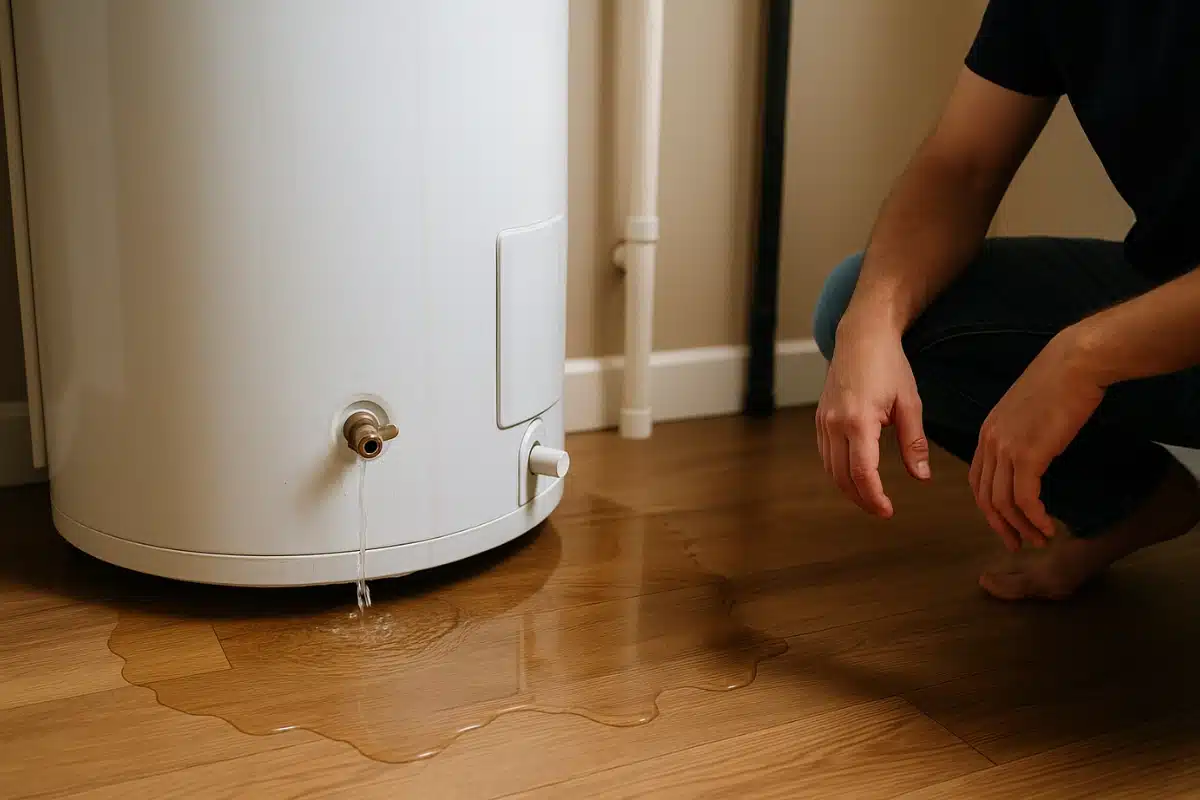
Noticing water leaking from the bottom of your water heater can be stressful, especially if it starts forming a puddle around the unit. In some homes, this begins as a slow drip that’s easy to ignore until it suddenly turns into a bigger problem.
In many cases, a water heater tank leaking from the bottom is caused by a worn-out part or internal issue. The good news is that some causes are easy to fix, while others simply mean it’s time to replace the unit. The key is figuring out what’s actually going on before things get worse.
First Step: What You Should Do Immediately
Before jumping into repairs, take a moment to control the situation.
Start by turning off the power supply switch off the breaker for electric units or shut off the gas supply if you have a gas water heater. Then, turn off the cold water inlet valve to stop more water from entering the tank.
If water is already pooling around the base, try to contain it using towels or a bucket. Acting quickly here can prevent damage to your flooring or nearby walls.
What Does It Mean When a Water Heater Leaks From the Bottom?
A leak from the bottom doesn’t always mean the tank itself has failed but it’s one of the first things people worry about.
Water can come from several components near the base of the heater, including the drain valve, internal tank lining, temperature and pressure relief valve, or even loose fittings. In some cases, it might just be condensation, which can look worse than it actually is.
This is why it’s important not to panic and instead take a closer look before assuming the worst.
Common Causes of Water Heater Leaking From Bottom
Faulty Drain Valve
The drain valve sits at the bottom of the tank and is used to flush out sediment during maintenance. Over time, it can loosen slightly or wear out, leading to small but noticeable leaks.
This is one of the more manageable issues, and in many cases, tightening or replacing the valve solves the problem.
Internal Tank Corrosion
If the tank itself is leaking, it’s usually due to corrosion inside the unit. Over the years, mineral deposits and sediment can break down the inner lining of the tank.
Unfortunately, this is something many homeowners don’t notice until water starts pooling around the heater. When this happens, repair is usually not an option, and replacement becomes necessary.
Sediment Buildup
Hard water can leave behind minerals that settle at the bottom of the tank. This buildup traps heat and increases pressure inside the unit, which can weaken the tank over time.
Regular flushing can help prevent this, but many people skip this step until problems appear.
T&P Relief Valve Issues
The temperature and pressure relief valve is designed to release excess pressure from the tank. If it starts discharging water near the bottom, it may be reacting to overheating or high pressure.
This isn’t always a fault with the valve itself it can sometimes point to a larger issue within the system.
Condensation
Sometimes what looks like a leak is actually condensation forming on the outside of the tank. This can happen when cold water enters a hot tank, especially in humid environments.
While this isn’t usually serious, it’s still worth monitoring to make sure it doesn’t turn into a real leak.
Loose Connections or Fittings
Water lines connected to the heater can loosen over time. When this happens, water may drip down and collect at the base, making it seem like the tank is leaking.
A quick inspection of fittings can often rule this out.
How to Identify Where the Leak Is Coming From
Instead of guessing, take a few minutes to inspect the unit closely.
Check if water is coming directly from the tank
Look at the drain valve for signs of dripping
Inspect pipes and fittings for moisture
Feel around the surface for condensation
Notice if the leak gets worse when the heater is running
Many people first spot the issue when they see water around the base or hear a faint dripping sound. Taking the time to pinpoint the source can save you from unnecessary repairs.
How to Fix Water Heater Leaking From Bottom
Once you have a better idea of the cause, you can decide on the right fix.
Tighten or Replace the Drain Valve
If the drain valve is the problem, try tightening it slightly. If the leak continues, replacing the valve is usually a simple fix.
Flush the Tank
If sediment buildup is causing pressure inside the tank, draining and flushing it can help restore normal operation.
Adjust Temperature and Pressure
If the relief valve is releasing water, lowering the temperature setting or checking pressure levels may help stabilize things.
Replace Worn Components
Old valves, seals, or fittings should be replaced to prevent further leakage.
Replace the Unit (If Tank Is Leaking)
If the leak is coming directly from the tank, replacement is usually the only reliable solution. While this may sound costly, it’s often better than dealing with ongoing leaks and damage.
If you’re unsure at any stage, it’s always a good idea to call a professional rather than risk making the problem worse. If you’re dealing with multiple plumbing issues at the same time, you may also want to read our guide on how to fix a toilet that won’t flush.
When a Leak Means Replacement Is Needed
Not every leak can be fixed.
If you notice rust, continuous dripping from the tank itself, or your unit is over 10 years old, it’s often a sign that the heater has reached the end of its lifespan.
Can a Leaking Water Heater Cause Damage?
Yes and sometimes faster than expected.
Water from the base can spread across floors, damage nearby walls, and create conditions for mold growth. In some cases, it can even affect nearby electrical components if left unchecked.
How to Prevent Water Heater Leaks
A little maintenance can go a long way.
Flush the tank once a year
Check the anode rod periodically
Inspect valves and fittings
Keep an eye on water pressure
Use a drip pan for added protection
Most problems develop slowly, so regular checks can help you catch issues early.
Plumbing problems often don’t happen in isolation. If you’re noticing issues in other fixtures, check out what to do when your toilet is overflowing.
Pro Tip
If your water heater is getting older and starts showing signs of leaking, replacing it sooner rather than later can save you from sudden failure and unexpected water damage.
FAQ
Why is my water heater leaking from the bottom?
It could be due to a faulty drain valve, sediment buildup, or internal corrosion.
Can I fix a leaking water heater myself?
Yes, small issues like loose fittings or valves are often easy to fix.
Is this something I should worry about immediately?
It’s best not to ignore it. Even small leaks can lead to bigger problems over time.
Should I turn off the heater if it’s leaking?
Yes, turning off power and water supply is the safest first step.
How long do water heaters typically last?
Most units last between 8 to 12 years, depending on maintenance and water quality.
Final Thoughts
A water heater leaking from the bottom doesn’t always mean a worst-case scenario, but it’s not something you should ignore either. Some issues are simple and easy to fix, while others point to bigger problems inside the tank.
Taking a few minutes to inspect the situation and understand the cause can make all the difference. With the right approach and quick action you can prevent further damage and keep your home safe.
About HomeRepairManual Team
The HomeRepairManual Team is a group of experienced technicians and DIY experts dedicated to making repairs easier. They provide clear, reliable guidance and practical resources to help users confidently fix and maintain their equipment.
View all posts by HomeRepairManual Team